Back To Top
S$0
June's birthstone isn't just one gem — it's three. Pearl, moonstone, and alexandrite are all official June birthstones, each with a distinct origin, appearance, and meaning.
Whether you're shopping for yourself, looking for a gift, or simply curious, this guide covers everything from history and symbolism to styling and how to choose the right one.

Pearl is the traditional June birthstone and one of the most well-known gemstones in the world, formed by living organisms rather than being mined from the earth.
Pearls grow inside oysters and mollusks when an irritant enters the shell, causing the creature to coat it in layers of nacre, a lustrous substance that eventually forms the pearl we know and love.
This organic origin gives pearls their distinct soft luster and gentle, creamy glow — a quality no synthetic stone can replicate. High-quality pearls have a reflective, almost mirror-like surface that makes them appear luminous from the inside.
Their understated elegance has been treasured across cultures and centuries.They remain as relevant today as ever.
The light moves inside a moonstone rather than reflecting off it, resulting an a phenomenon called adularescence, a soft, billowing glow that appears to float beneath the surface when illuminated. The effect is called adularescence, and in the finest stones it appears as a blue sheen against a near-colourless background.
Moonstone is the best-known gemstone of the feldspar group of minerals, and it has long been associated with Roman and Greek lunar deities. Its name is derived from this connection: the Roman natural historian Pliny the Elder observed that the stone's shimmery appearance appeared to change with the phases of the moon.
Today, moonstone is popular in ethereal, spiritual, and minimalist designs. It has a romantic, otherworldly quality that suits those who want their jewelry to carry meaning as well as beauty.
Few gemstones command attention the way alexandrite does.In daylight or fluorescent light, alexandrite appears green to bluish-green; under incandescent or warm candlelight, it shifts to purplish-red. This phenomenon is commonly referred to as "emerald by day, ruby by night."
The colour shift is caused by traces of chromium in alexandrite's chemical composition — the same element that gives emeralds their green.
First discovered in Russia in the 1830s, alexandrite is among the rarest gemstones in the world. Its beauty, rarity, and remarkable transformation have made it a defining stone for collectors and connoisseurs.
Pearl: White to cream, with soft iridescent overtones that shift between pink, gold, and silver depending on the light. No two pearls catch colour in quite the same way.
Moonstone: A translucent base with an inner blue to white glow — cool, quiet, and luminous. Some stones lean peach or grey, but the inner light is always the defining feature.
Alexandrite: Green to teal in daylight; red to purplish-red under incandescent light. The same stone looks entirely different depending on where you wear it, which is precisely what makes it extraordinary.
The tradition of birthstones is traced back to biblical descriptions of priestly garments adorned with twelve stones representing the twelve tribes of Israel, an origin that eventually became linked to the twelve months of the year.
The modern birthstone list was first standardized in 1912 by the National Association of Jewelers of America, and has been refined several times since.
The practical reason for multiple birthstones is accessibility, giving people more options across price points, color preferences, and aesthetic styles. For June specifically, each birthstone serves a different kind of wearer. Pearl became associated with the month through long-standing tradition and timeless elegance. Moonstone gained recognition for its dreamy, ethereal appearance and soft spiritual associations. Alexandrite was added as the more luxurious option - a collector's birthstone for those who want something genuinely rare.
Pearls have long been associated with purity, humility, and innocence — which is also why they have been given as wedding gifts for centuries.More than bridal tradition symbolism, there is a quiet confidence to pearls. Pearls suggest wisdom and emotional steadiness — refinement that feels earned rather than performed.
Pearls appeal to those who value quality over trend, and understand that the most enduring things rarely shout.
Moonstone's symbolism is rooted in its appearance. The soft inner glow that appears to emanate from somewhere beyond the surface. It is a stone associated with intuition, new beginnings, and the kind of inner growth that happens quietly and over time.
For those drawn to softer, more contemplative aesthetics — people who wear jewelry that feels like it means something — moonstone fits naturally. It is not a stone that performs. It is a stone that resonates.
Because of its ability to transform under different lighting conditions, alexandrite has become associated with duality, adaptability, and change. It is rare and refined, with an edge that keeps it interesting.
Alexandrite suits those who value individuality in their jewelry — who wants to wear something that says something about them without having to explain it.
Pearl is the choice for someone who wants their jewelry to work for everything. Whether it is a dinner out, a Monday morning, or a wedding, pearls simply work.
They are the natural choice for bridal jewelry, not just because of tradition, but because their quiet elegance photographs beautifully and complements every skin tone and dress color. And unlike most trend-driven pieces, pearls are timeless and will never date.
Moonstone suits the person who wears jewelry with intention. If you're drawn to layered necklaces, soft color palettes, and pieces that feel like they carry some kind of history, moonstone belongs in your collection.Its gentle glow makes it an easy companion for other delicate pieces.
Moonstone is associated with feminine energy, emotional balance. It adds elegance and positive energy to both casual and dressed-up outfits.
Alexandrite is in a category of its own. If you gravitate toward jewelry that makes a considered statement — something rare, something with a history — this is the stone for you.
One of the rarest gemstones in the world, alexandrite carries a quiet authority that feels entirely right for someone who wears jewelry for personal expression, rather than convention.
Few gemstones have had a longer or more consistent history than pearls. Archaeological evidence suggests that pearl fishing began in the Persian Gulf as early as 2300 BC, with Chinese royalty prizing freshwater pearls around the same time.
Cultures across the ancient world built mythologies around them: Middle Eastern traditions held that pearls were teardrops fallen from heaven; in China, they were said to come from a dragon's brain.Through the Middle Ages and Renaissance, pearls were reserved for royalty and nobility, with sumptuary laws restricting their wear to the elite.
That changed in 1893, when Kokichi Mikimoto discovered how to cultivate pearls on farms, shifting them from an exclusive luxury into something the wider world could own.
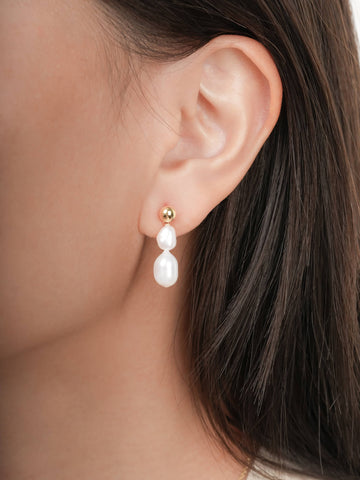
Cultured pearls are now among the most popular gems worldwide, worn in baroque drops, delicate pendants, and layered necklaces as comfortably with a linen shirt as with a wedding gown.
Pearls come in more varieties than most people realize, and one of the most common comparisons is between natural and cultured pearls. The most important thing to know: both are real pearls. The difference lies entirely in how they're formed.
Natural pearls form in nature without human intervention and are now so scarce that they are almost exclusively found at auction. Cultured pearls grow in controlled farm environments, providing the same nacre and luster at a much lower cost.
Pearl is one of those gemstones that never loses their appeal, and the way the industry has reimagined it recently only proves the point. Today's pearl jewelry leans minimalist: simple bands, lower profiles, clean lines that let the gem speak.
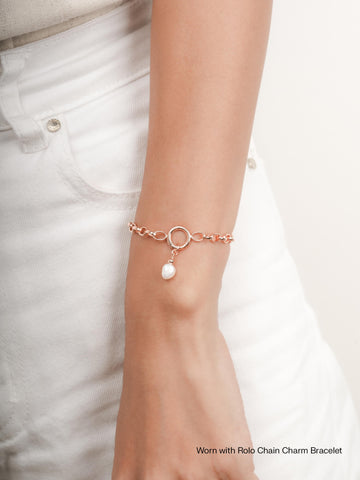
Pearl accessories have had a sustained runway presence in recent seasons, appearing not as a nod to the past but as a reinvention of what pearl jewelry can look and feel like. Designers are moving away from perfect symmetry, with open bands, uneven arrangements, and baroque shapes replacing the uniform strand as the more interesting choice. Mixed metals have played a role, with pearls now set in yellow gold and rose gold as readily as silver.
The bigger shift, though, is cultural. Pearl jewelry today is worn by choice rather than convention, whether stacked with plain bands, layered with gold chains, or worn alone as a single intentional piece.
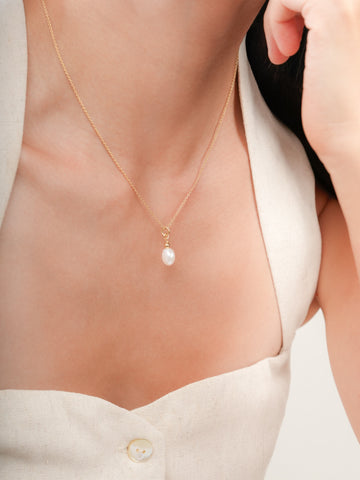
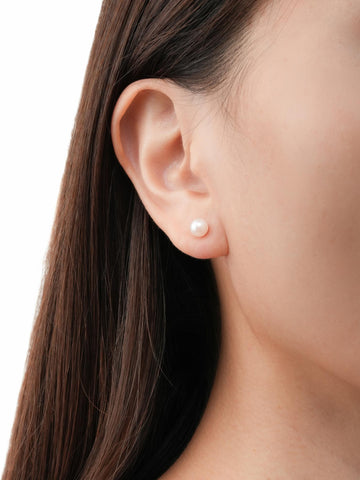
The most wearable approach to June birthstone jewelry right now is simple and intentional. A single freshwater pearl pendant on a fine gold chain. A small moonstone ring worn alongside a plain band. A pair of pearl studs that you reach for without thinking and that always look right.
All three June birthstones work beautifully for bridal and occasion wear, each in their own way. Pearls are the classic choice because they're timeless, universally flattering, and meaningful without needing explanation. Moonstone offers something softer for the bride who wants ethereal and personal over traditional.
And for milestone occasions like an anniversary, alexandrite carries a weight that most stones simply do not.
Layering is one of the most popular ways to wear pearl necklaces right now, and the technique is more approachable than it appears. A choker-length pearl strand combined with a longer pendant and a delicate gold chain creates a layered look that feels effortless rather than overdressed.
The key is mixing lengths and textures: a 16" Akoya strand alongside a 20" fine gold chain and a baroque pearl pendant, for instance, lets each piece read clearly without competing. Classic white with softer pastel tones, freshwater with baroque — contrast is what makes the layers work.
The metal you choose changes the feeling of the piece. Warm gold deepens the creamy tones of pearl and brings out the richness of alexandrite's colour shift. Rose gold softens moonstone's glow into something more romantic. Silver gives all three stones a cooler, cleaner edge. There is no wrong pairing — it comes down to which tone feels most like you.
At Mondays Made, all three finishes, 18k gold in a warm champagne hue, 18k rose gold for something softer and more romantic, and s925 rhodium for a cooler, brighter finish, are crafted in vermeil so they wear well and last. The choice really comes down to which tone feels most like you.
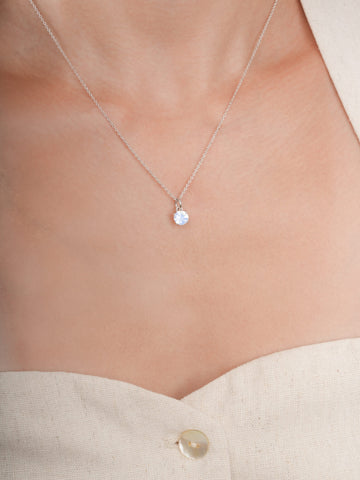
A June birthday is one of the most considered to shop for, and the Mondays Made June collection makes it genuinely easy. The June Birthstone Necklace in Moonstone is a dedicated birthstone necklace that feels chosen specifically for her.
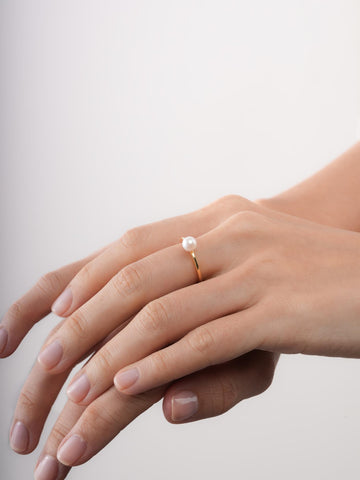
For something with a little more everyday wearability, the bestselling Akoya Pearl Ring is clean, elegant, and effortlessly versatile.
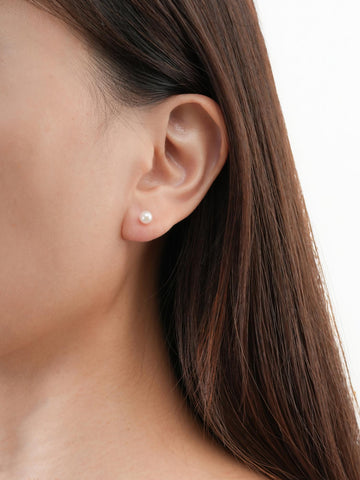
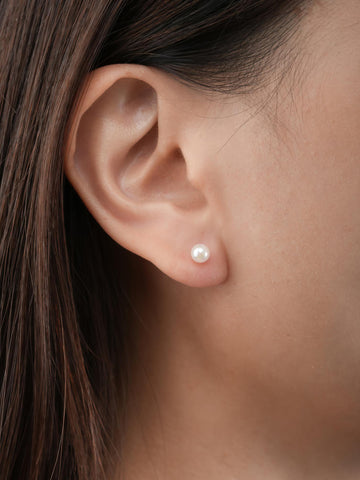
For bridal gifting, the Akoya Pearl Stud Earrings (Large) are a natural choice - they are classic enough for the occasion, and understated enough to wear long after. And for the bride who wants something more romantic in feeling, the Carved Pink Rose Necklace & Earrings Set in mother of pearl is a complete, ready-to-gift option.
For an anniversary gift that feels personal, the True As You Are collection is worth considering. Available in necklaces, earrings, and charms, each piece is built around baroque pearls that celebrate natural, one-of-a-kind shapes that are no two exactly alike. It's a subtle way of saying that you love someone because of just the way they are.
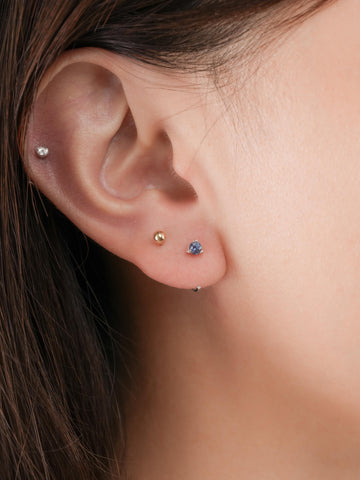
June is graduation season, and birthstone jewelry is a thoughtful way to mark it.The June Birthstone Necklace - Moonstone is a clean, timeless design that can grow with her through whatever comes next — and moonstone's association with new beginnings makes it feel genuinely suited to the moment rather than simply decorative. For something simpler, the June Birthstone Mini Hoop Earrings are an easy, wearable gift that still feels considered.
Whether it's a birthday, a personal milestone, or simply a moment worth marking, there's nothing wrong with buying yourself something beautiful. The Carved Pink Rose Huggie Earrings in mother of pearl are the kind of everyday earrings that elevate any look without demanding attention.
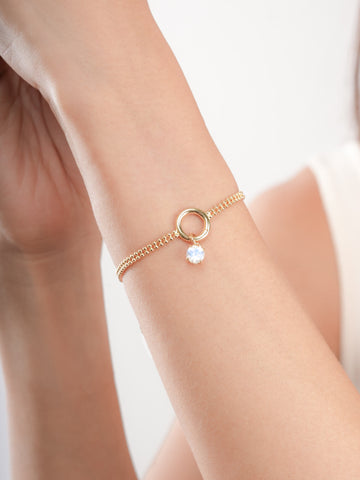
For something more personal, the June Birthstone Charm in Moonstone is a piece worth choosing for yourself. At its center sits a handpicked natural moonstone, with moissanite stones peeking from beneath to add depth and a soft, luminous glow.
Flip it over and there is a hidden "X" on the back — a small signature detail that makes the piece feel like it was made with intention, not just made. That detail is yours alone.
June has three official birthstones: pearl, moonstone, and alexandrite. Each is distinct in appearance, origin, and meaning — pearls for their timeless lustre and quiet elegance, moonstones for their soft inner glow and spiritual associations, and alexandrite for its extraordinary colour-changing rarity.
Pearl ranges from white to cream with soft iridescent overtones. Moonstone is translucent with a blue to white inner glow. Alexandrite is the most striking of the three — green to teal in natural light, and red to purplish-red under incandescent light. The same alexandrite stone reads differently depending on where you wear it.
June's birthstone theme is broadly associated with luminosity, intuition, and emotional depth — qualities shared across all three stones. This is often connected to the "Strawberry Moon" tradition, when ancient communities harvested strawberries under the bright summer moon in June. The themes that recur across pearl, moonstone, and alexandrite are wisdom, transformation, and a kind of quiet inner strength.
The modern birthstone list was first standardised in 1912, with pearl assigned as June's primary stone. Alexandrite was later added for its rare beauty and unique colour-changing properties. As natural alexandrite became increasingly scarce and expensive, moonstone gained recognition as a more accessible alternative — luminous enough to share pearl's quiet elegance, rare enough to feel considered.
Pearl: A soft, iridescent milky-white surface with layered inner depth. The lustre comes from nacre — the same substance the oyster uses to coat the irritant that started the process.
Moonstone: A translucent stone with adularescence — a billowing inner glow that shifts as the stone moves. The finest moonstones have a blue shimmer against a near-colourless base.
Alexandrite: Famous for its colour change. Green to teal in daylight; purplish-red under warm incandescent light. Caused by traces of chromium in the stone's composition — the same element that makes emeralds green.
Pearls are associated with purity, elegance, wisdom, and emotional steadiness. Historically given as wedding gifts, they carry a sense of enduring refinement. Today, pearl jewelry is often chosen for its timeless aesthetic and quiet confidence.
Yes. Moonstone is a genuine natural gemstone — a member of the feldspar mineral group, known for its soft iridescent glow and long association with intuition, calmness, and new beginnings.
Natural alexandrite is rare because it requires an unusual combination of chromium and beryllium in the same geological environment — a combination that occurs in very few places on earth. High-quality natural alexandrite with a strong, clean colour change is one of the rarest and most valuable gemstones in the world. Lab-grown alexandrite offers the same colour shift, chemical composition, and hardness, making it an accessible and considered alternative.
Yes. Pearl jewelry has had a sustained presence in fashion and bridal wear in recent seasons — not as a nostalgic revival but as a genuine reinvention. Contemporary pearl styling leans minimalist: pearl rings worn stacked with plain bands, baroque shapes instead of uniform strands, and layered necklaces replacing the single classic strand. Pearl remains as versatile and relevant as ever.
Yes, with some care. Pearls are softer than most gemstones and respond to the chemicals in perfume, skincare, and water. Wipe them gently after wear, store them separately to avoid surface scratches, and avoid prolonged exposure to water or perfume. With that, pearl jewelry can last for decades and typically becomes more beautiful over time.
Absolutely. Many people choose pearl, moonstone, or alexandrite because of the appearance, the symbolism, or simply because it resonates with them. Birthstone jewelry is most meaningful as a gift when it connects to someone's birthday or a shared memory — but it requires no explanation when worn for yourself.
It is one of the most thoughtful categories of jewelry gift, precisely because it is personal by design. Giving someone their birthstone signals that you noticed, that you chose something specific to them rather than something generically beautiful. June birthstone jewelry works especially well for birthdays, graduations, anniversaries, bridal gifting, and milestone occasions.
Some of the most loved pieces include the Akoya Pearl Ring, the June Birthstone Necklace in Moonstone, and the June Birthstone Mini Hoop Earrings in lab-grown alexandrite.
For those who also want to explore birthday-inspired jewelry beyond birthstones, we have pieces from our Birth Flower and Zodiac collections — including floral-inspired designs and Gemini and Cancer jewelry for June birthdays.
June’s birth flower is the rose, symbolizing love, passion, appreciation, and heartfelt connection.
Roses became associated with June because they typically bloom most beautifully during early summer. Rose-inspired jewelry has its own long history of romantic symbolism — and sits naturally alongside June birthstone pieces for those who want to layer meaning into how they wear jewelry.
The best bridesmaid jewelry gifts are pieces they'll reach for long after the wedding. A guide to choosing well — for every personality in your party.
Pearl is one of the most beautiful natural gems in the world, & it comes in different colors, qualities, & values. This is a complete guide on pearls for you.
Peridot is August's birthstone — a warm, yellow-green "gem of the sun" tied to renewal and light. Explore its meaning, color, origins, and how to wear it.
Flat back or butterfly back? Compare comfort, security, fit and everyday wear — plus which backing suits new piercings, cartilage and every earlobe.
Should you travel with your engagement ring, heirloom or everyday piece? A simple guide to travel rings — what they are, how to keep your real ring safe, and what...